Real World Leadership

Leadership One Day at a Time

Category: AI

  • The Soul in the Machine: Reclaiming the Human Element in the Age of AI at Work

    The Soul in the Machine: Reclaiming the Human Element in the Age of AI at Work

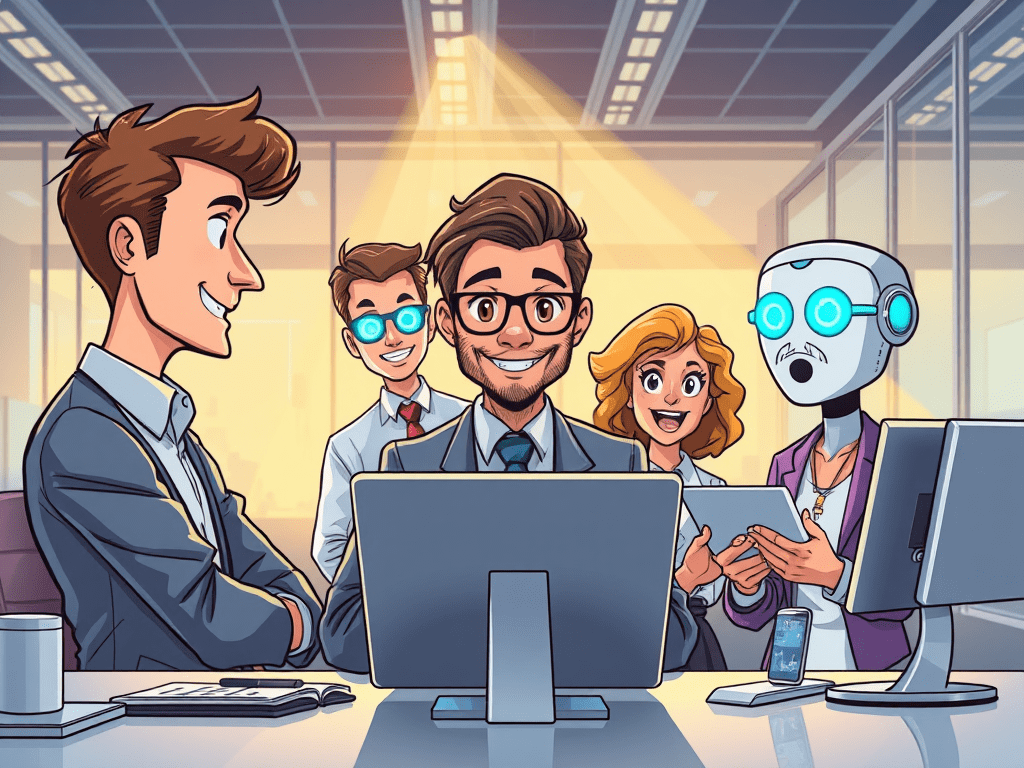
    Alright, let’s have a real heart-to-heart about this whole AI thing shaking up our work lives. As someone who’s spent years watching how people tick at work, the tech side of AI is cool and all, but what about the human side of it. Because at the end of the day, it’s about us, right? How we feel, how we adapt, and how we keep that human spark alive when the robots start doing some of our old jobs.

    So, picture this: AI strolls into the office, not in a clanky robot suit (yet!), but as software, algorithms, the whole shebang. Suddenly, some of the stuff you used to spend hours on – sorting spreadsheets, answering the same old customer questions, even drafting basic reports – poof! The AI can handle it in a fraction of the time.

    Now, for some folks, this feels like winning the lottery. Imagine being freed from those tasks that make your eyes glaze over. You can finally focus on the stuff you actually enjoy, the creative problem-solving, the chatting with clients and building real connections, the big-picture thinking. It’s like having a super-efficient assistant who takes care of the grunt work so you can shine.

    But let’s be real, for others, this feels… well, a bit scary. You might be thinking, “Wait a minute, that was my job. If the computer can do it, where do I fit in?” That knot of anxiety in your stomach? Totally understandable. It’s a natural human reaction to change, especially when it feels like your livelihood is on the line.

    And that’s where companies really need to step up and show their human side too. Just throwing in the latest AI without a thought for the people it affects is a recipe for a grumpy, resistant workforce. So, what are the smart companies doing to navigate this and keep everyone on board?

    First off, talking, like, really talking. None of that corporate jargon that makes your brain switch off. I’m talking clear, honest conversations about what’s changing, why it’s changing, and, crucially, how it’s going to affect you. Companies need to paint a realistic picture, not just the shiny, futuristic one. They need to say, “Okay, this task will be automated, but that means you’ll have the chance to learn this new skill and work on this more interesting project.” It’s about being straight with people and not hiding the potential downsides.

    Then comes the super important part: teaching and training. If AI is going to change the game, companies have a responsibility to equip their players with new skills. Think of it like leveling up in a game. Your old skills might still be useful, but there are new ones you need to learn to thrive in this AI-powered world. This could be anything from learning how to work with the AI tools, understanding the data it spits out, or even developing entirely new skills that are more human-centric, like emotional intelligence or complex communication. Companies that invest in their people this way aren’t just being nice; they’re being smart. A skilled and adaptable workforce is way more valuable in the long run.

    But it’s not just about the hard skills. It’s also about fostering a culture of collaboration, not competition, with AI. The message needs to be: AI is a tool to help us, not replace us. Think of it like a super-powered calculator for your brain. It can do the heavy lifting, freeing you up to do the creative, strategic stuff that machines just aren’t good at. Companies that encourage their teams to experiment with AI, to give feedback, and to find ways where humans and AI can work together best are the ones that will see real success.

    And let’s not forget the human touch. In a world increasingly driven by algorithms, the uniquely human skills – empathy, creativity, critical thinking, the ability to connect with others on a real level – become even more valuable. Companies should actively nurture these skills, creating opportunities for collaboration, brainstorming, and those water cooler moments where real ideas spark. It’s about reminding everyone that even with all this fancy tech, the human element is still what makes a business truly thrive.

    Leadership plays a massive role in all of this. If the folks at the top are nervous about AI or just see it as a cost-cutting measure, that attitude will trickle down. But leaders who are genuinely excited about the possibilities, who communicate openly and honestly, and who show they care about their employees’ well-being are the ones who will build trust and inspire their teams to embrace the change.

    So, it’s about remembering that this isn’t a one-size-fits-all situation. The impact of AI will be different for different roles and different people. Companies need to be flexible and adaptable in their approach, listening to individual concerns and tailoring their support accordingly.

    Look, AI isn’t going anywhere. It’s going to keep changing the way we work. But if we focus on the human side of this revolution – by communicating openly, investing in our people, fostering collaboration, and valuing those uniquely human skills – we can navigate this change in a way that benefits everyone. It’s not about the soul versus the machine; it’s about finding a way for them to dance together, creating a workplace that’s both efficient and, well, still feels human. And that, to me, is the most important part of all.


  • Overcoming the Lack of Technical Expertise in Adopting AI

    Overcoming the Lack of Technical Expertise in Adopting AI

    Adopting Artificial Intelligence (AI) can be a game changer for Small and Medium-sized Businesses (SMBs). The potential benefits span from increased operational efficiency to enhanced customer experiences and innovative product offerings. However, one of the significant hurdles SMBs face is the lack of in-house technical expertise required to harness AI effectively. This article seeks to address various strategies SMBs can employ to overcome this challenge and successfully integrate AI into their operations.

    Understanding the Challenges

    AI technologies offer immense potential but also come with a steep learning curve. The complexity involved in developing, deploying, and maintaining AI systems can be daunting for businesses that lack specialized knowledge and skills. Additionally, hiring or training staff to manage AI systems can be a considerable financial and logistical challenge. To navigate these obstacles, SMBs need to adopt a strategic approach that aligns with their resources and business goals.

    Retain an AI Guide

    Having an AI guide or advisor can help you navigate the best options for your company based on your specific needs. The guide will assist you in selecting from various options and techniques listed below, as well as any additional specific needs for your business. This expert can also provide insights into emerging AI trends and help you stay ahead of the competition. Additionally, they can offer training sessions for your team to ensure smooth implementation and operation of AI systems. AI Guides are normally engaged in a fractional capacity which in turn helps control expenses.

    Outsourcing AI Expertise

    One of the most effective ways for SMBs to overcome the lack of technical expertise is to outsource AI capabilities. Partnering with AI consultants or firms that specialize in AI can provide access to cutting-edge technologies and expert knowledge without the need for substantial internal investments. These external partners can help businesses identify the most suitable AI solutions, implement them, and provide ongoing support.

    Some Benefits of Outsourcing

    • Cost Efficiency: Outsourcing minimizes the need for expensive hiring and training processes.
    • Access to Expertise: Partnering with AI firms provides access to seasoned professionals with extensive experience.
    • Focus on Core Business: SMBs can concentrate on their core competencies while AI experts handle the technical aspects.

    Leveraging AI Platforms and Tools

    AI platforms and tools have become increasingly accessible and user-friendly, making it easier for SMBs to integrate AI into their operations. Many of these platforms offer pre-built models, intuitive interfaces, and comprehensive documentation that simplify the adoption process. By leveraging these tools, businesses can bypass the need for deep technical expertise and quickly deploy AI solutions.

    Some Top AI Platforms

    • Google Cloud AI: Offers a range of AI and machine learning services that are easy to integrate and scale.
    • Microsoft Azure AI: Provides powerful AI capabilities with extensive support and resources. Microsoft also provides its Copilot solutions that many general access to AI feature approachable for any company.
    • IBM Watson: Known for its advanced analytics and AI solutions tailored for various industries.
    • Amazon Web Services (AWS) AI: Offers a comprehensive suite of AI and machine learning tools that are scalable, robust, and widely used across various sectors.

    Training and Upskilling Current Employees

    While outsourcing and leveraging AI platforms can meet immediate needs, it is equally important for SMBs to invest in the long-term development of their workforce. Training and upskilling existing employees allow businesses to cultivate internal expertise and adapt to evolving AI technologies. Companies should establish a clear roadmap outlining their current status and future goals, both as a business and in relation to AI utilization. This strategic planning will enable them to create an effective upskilling plan, ensuring that limited resources are allocated more efficiently.

    Steps to Upskill Employees

    • Identify Skill Gaps: Assess the current skill levels and identify areas that require improvement.
    • Provide Training Programs: Enroll employees in AI-focused courses and workshops.
    • Encourage Continuous Learning: Foster a culture of continuous learning through access to online resources and certifications.

    Collaborating with Academic Institutions

    Partnering with academic institutions can offer SMBs specialized knowledge and resources that are invaluable in advancing their AI initiatives. By engaging with universities and research centers, businesses can access the latest research, tap into a pool of talented graduates, and collaborate on projects that push the boundaries of AI innovation.
    Furthermore, academic partnerships can provide unique insights into emerging trends and technologies, helping businesses stay ahead of the curve. Such collaborations can also foster a culture of continuous learning and innovation within the organization.

    Advantages of Academic Collaboration

    • Access to Research: Gain insights from the latest academic research in AI.
    • Talent Pipeline: Connect with students and graduates with relevant expertise.
    • Joint Projects: Develop AI solutions through collaborative projects with academic partners.

    Investing in AI Education and Awareness

    Lastly, SMBs must prioritize educating themselves and their teams about AI. Comprehending the fundamentals of AI, its potential applications, and its constraints can empower businesses to make informed decisions and identify opportunities for AI integration. Additionally, consistent investment in AI literacy will ensure that the organization remains adaptive to future technological advancements.

    Educational Resources

    • Online Courses: Platforms like Coursera, Udacity, and edX offer comprehensive AI courses.
    • Industry Conferences: Attend AI conferences and seminars to stay updated on trends and network with experts.
    • Books and Publications: Read books and journals on AI to deepen knowledge and understanding.

    Looking Forward

    While the lack of technical expertise can be a significant barrier for SMBs in adopting AI, there are multiple strategies to overcome this challenge. By engaging an AI Guide, outsourcing AI expertise, leveraging accessible AI platforms, training and upskilling employees, collaborating with academic institutions, and investing in AI education and awareness, SMBs can navigate the complexities of AI technologies. These approaches will enable them to harness the power of AI, drive innovation, and maintain a competitive edge in their respective industries.

  • Adopting AI Wisely: Navigating the Challenges for Small Businesses

    Adopting AI Wisely: Navigating the Challenges for Small Businesses

    In the hectic world of technological advancements, Artificial Intelligence (AI) stands out as a game-changer for businesses of all sizes. But for small businesses, the stakes are even higher. Imagine the chaos of making the wrong choice and watching your hard-earned assets slip away. Choosing the right AI technologies can be a daunting task, fraught with risks like loss of intellectual property, revenue loss, and legal issues. This article provides insights into adopting AI wisely, ensuring your small business not only survives but thrives in this competitive landscape.

    Unique Challenges Faced by Small Businesses
    Small businesses often operate with tight budgets, limited capacity, and a shortage of specialized skills, making the adoption of new technologies a formidable challenge. Unlike larger organizations, small businesses may not have dedicated IT departments or the luxury to experiment with various AI solutions. This makes the selection process even more critical, as the wrong choice can have severe repercussions.

    One of the most significant risks is the potential loss of intellectual property. Imagine your company’s trade secrets or financial information being inadvertently shared with the public or competitors. This nightmare scenario is not far-fetched if AI technologies are not chosen and implemented carefully. Additionally, improper AI adoption can lead to substantial revenue loss if the system fails to deliver accurate insights or automates processes incorrectly.

    But the hurdles don’t stop there. Small businesses face additional external and internal challenges when adopting AI. There’s the fear of job loss among employees, which can create resistance to change. Ethical and regulatory constraints are shifting rapidly, adding another layer of complexity. And for businesses operating internationally, the difficulty becomes even more pronounced, navigating a maze of varying regulations and standards.

    In this high-stakes environment, making informed and strategic decisions about AI adoption is crucial. With the right approach, small businesses can harness the power of AI to drive growth, enhance efficiency, and stay competitive in an ever-evolving market.

    Importance of Guided AI Adoption
    Navigating the complexities of AI can feel like charting a course through uncharted waters. That’s why having a knowledgeable guide or consultant by your side is invaluable. Leadership plays a pivotal role in AI decision-making, ensuring that every choice aligns with the company’s strategic goals and risk management policies. A well-informed guide can illuminate the path, providing insights into best practices for AI adoption and helping to steer clear of potential pitfalls.

    By making informed choices, small businesses can dodge the dangers of improper AI implementation. This not only safeguards valuable assets but also sets the stage for long-term success. The benefits of guided AI adoption are crystal clear: reduced risk, enhanced security, and a competitive edge in the market. With the right guidance, small businesses can harness the full power of AI, transforming challenges into opportunities and driving their success to new heights.

    Criteria for Selecting AI Technologies
    When selecting AI technologies, safety and security should be top priorities. Small businesses must ensure that their chosen AI solutions do not share sensitive inputs with the general public. Evaluating AI vendors and solutions is essential to verify their commitment to data privacy and protection.

    It’s crucial to avoid free hosted Generative AI solutions like ChatGPT for sensitive tasks. While these platforms offer impressive capabilities, they also pose significant risks. Any intellectual property, trade secrets, financial information, or other critical data entered into these systems become part of the AI’s knowledge base. This information could potentially be exposed to the public and competitors, leading to severe consequences.

    Risks of Free Hosted Generative AI Solutions
    Generative AI solutions like ChatGPT are powerful tools, but they come with inherent risks. For example, an employee might use ChatGPT to draft a confidential report, unknowingly sharing sensitive company information with the AI platform. This data is then stored and used to improve the AI, potentially exposing it to other users.

    Real-world examples highlight the dangers of using free hosted AI platforms. Companies have faced significant backlash and financial loss due to data breaches and IP theft resulting from improper AI usage. These incidents underscore the importance of selecting AI technologies that prioritize data security and privacy.

    Case Study: Samsung Proprietary Information Shared
    In a recent incident, Samsung employees inadvertently leaked sensitive company information by using ChatGPT, a public generative AI solution. The employees, working in Samsung’s semiconductor division, used ChatGPT to help with tasks such as optimizing test sequences for chips and converting meeting notes into presentations. Unfortunately, this led to the exposure of proprietary code, internal meeting notes, and other confidential data

    Strategies for Safe AI Adoption
    To adopt AI safely, small businesses should conduct thorough assessments and evaluations of potential AI solutions. Implementing robust data protection measures is essential to safeguard sensitive information. Training employees on safe AI usage is another critical step, ensuring they understand the risks and best practices.

    Collaborating with trusted AI vendors can also mitigate risks. These vendors often offer secure, enterprise-grade solutions designed to protect sensitive data. By partnering with reputable providers, small businesses can leverage AI’s benefits without compromising security.

    In Closing
    Adopting AI wisely is not just about choosing the right technologies; it’s about protecting your small business from unintended consequences. By making informed and intentional choices, small businesses can safeguard their valuable assets and maintain a competitive edge. The future of AI adoption is promising, but it requires careful planning and execution.

    Stay tuned for the next article in this series, where we will delve deeper into specific AI applications and strategies for small businesses. Together, we can navigate the complexities of AI and unlock its full potential for your business.

  • The Future of AI: Predictions for 2022 and Beyond

    The Future of AI: Predictions for 2022 and Beyond

    I just finished reading Ready Player One and it has inspired me to write this article so…

    Welcome to the exciting world of artificial intelligence (AI) and machine learning (ML)! As we stand on the cusp of 2021, the landscape of AI is evolving at a breakneck pace. From transforming business operations to enhancing everyday life, AI is set to redefine our future. Let’s dive into some intriguing predictions for AI, adoption and usage, considering emerging technologies and evolving business needs.

    1. AI in Business: The Rise of Intelligent Automation

    In 2021, businesses are expected to embrace AI more than ever before. AI’s role in automation and data processing will be pivotal. Companies will leverage AI to optimize security, efficiency, and real-time decision-making. Imagine AI systems that not only predict supply chain disruptions but also proactively manage inventory and logistics. This shift from reactive to proactive AI will revolutionize business strategies.

    2. Creativity Unleashed

    Soon, businesses will begin to harness AI to produce personalized marketing content, design innovative products, and even generate code. The creative possibilities are endless, and we can expect AI to become a co-creator in various industries.

    3. Enhanced Customer Experiences

    AI will play a crucial role in enhancing customer experiences. Predictive analytics powered by AI will allow businesses to anticipate customer needs and tailor their offerings accordingly. Personalized recommendations, chatbots, and virtual assistants will become more sophisticated, providing seamless and engaging interactions. This will lead to higher customer satisfaction and loyalty. This is already being done in a deterministic manner but in the near future this will become more personalized with the adoption of AI into existing business processes.

    4. AI Ethics and Governance

    As AI becomes more pervasive we will likely see new regulatory and compliance guardrails put in place. Nobody wants to see Skynet or the world of the Matrix, let alone the possibilities presented in Wargames. As such safeguards will need to be put in place. The focus will be on mitigating uncontrolled usage of AI and AI algorithms in system usage and control. Ethical AI will not only build trust but also drive sustainable adoption.

    5. Edge Computing and AI

    Edge computing, which brings computation closer to the data source, will complement AI’s growth. By processing data locally, edge computing reduces latency and enhances security. This synergy will enable real-time applications in healthcare, autonomous vehicles, and smart cities. The combination of AI and edge computing will unlock new possibilities for innovation.

    6. AI in Healthcare

    The healthcare sector will witness remarkable advancements with AI. From diagnosing diseases to predicting patient outcomes, AI will enhance medical research and treatment. Telemedicine powered by AI will provide remote consultations and personalized care plans. The integration of AI in healthcare will lead to improved patient outcomes and more efficient healthcare systems.

    Looking Forward

    As we venture into 2022, the future of AI looks incredibly promising. Businesses will harness AI to drive efficiency, creativity, automation, and customer satisfaction. Emerging technologies around AI, ML, and edge computing will unlock new possibilities, while ethical considerations will ensure responsible AI usage. The journey ahead is filled with innovation and transformation, and AI will undoubtedly be at the forefront of this exciting evolution.
    Stay tuned for more updates as we navigate the fascinating world of AI!