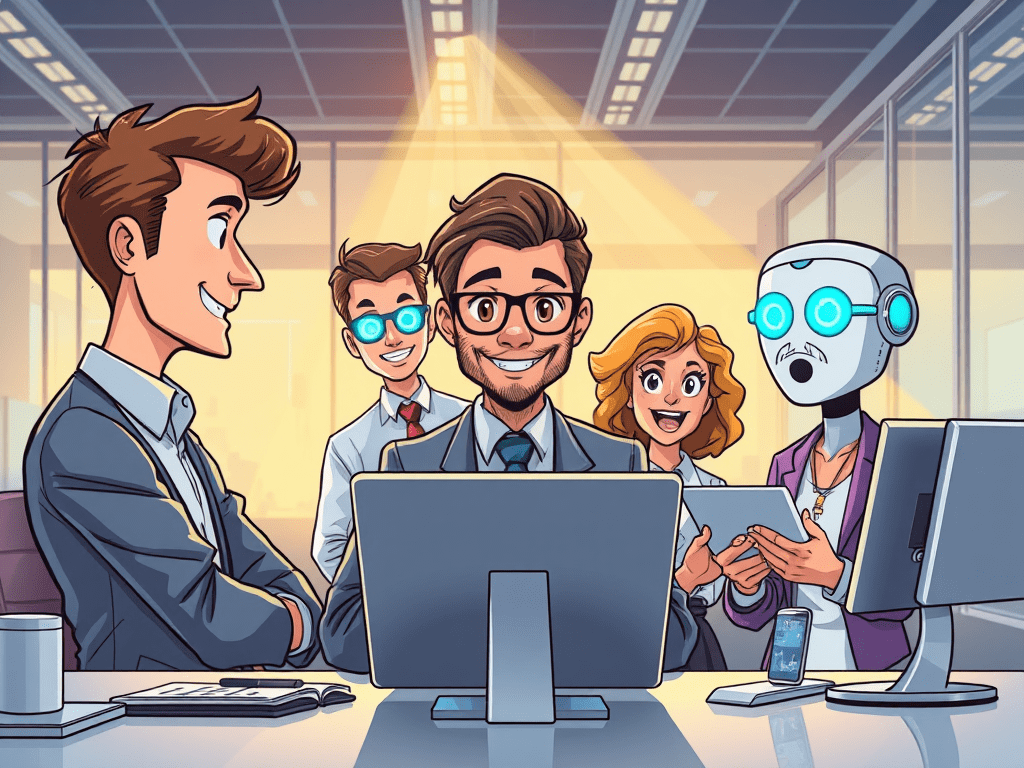
Alright, let’s have a real heart-to-heart about this whole AI thing shaking up our work lives. As someone who’s spent years watching how people tick at work, the tech side of AI is cool and all, but what about the human side of it. Because at the end of the day, it’s about us, right? How we feel, how we adapt, and how we keep that human spark alive when the robots start doing some of our old jobs.
So, picture this: AI strolls into the office, not in a clanky robot suit (yet!), but as software, algorithms, the whole shebang. Suddenly, some of the stuff you used to spend hours on – sorting spreadsheets, answering the same old customer questions, even drafting basic reports – poof! The AI can handle it in a fraction of the time.
Now, for some folks, this feels like winning the lottery. Imagine being freed from those tasks that make your eyes glaze over. You can finally focus on the stuff you actually enjoy, the creative problem-solving, the chatting with clients and building real connections, the big-picture thinking. It’s like having a super-efficient assistant who takes care of the grunt work so you can shine.
But let’s be real, for others, this feels… well, a bit scary. You might be thinking, “Wait a minute, that was my job. If the computer can do it, where do I fit in?” That knot of anxiety in your stomach? Totally understandable. It’s a natural human reaction to change, especially when it feels like your livelihood is on the line.
And that’s where companies really need to step up and show their human side too. Just throwing in the latest AI without a thought for the people it affects is a recipe for a grumpy, resistant workforce. So, what are the smart companies doing to navigate this and keep everyone on board?
First off, talking, like, really talking. None of that corporate jargon that makes your brain switch off. I’m talking clear, honest conversations about what’s changing, why it’s changing, and, crucially, how it’s going to affect you. Companies need to paint a realistic picture, not just the shiny, futuristic one. They need to say, “Okay, this task will be automated, but that means you’ll have the chance to learn this new skill and work on this more interesting project.” It’s about being straight with people and not hiding the potential downsides.
Then comes the super important part: teaching and training. If AI is going to change the game, companies have a responsibility to equip their players with new skills. Think of it like leveling up in a game. Your old skills might still be useful, but there are new ones you need to learn to thrive in this AI-powered world. This could be anything from learning how to work with the AI tools, understanding the data it spits out, or even developing entirely new skills that are more human-centric, like emotional intelligence or complex communication. Companies that invest in their people this way aren’t just being nice; they’re being smart. A skilled and adaptable workforce is way more valuable in the long run.
But it’s not just about the hard skills. It’s also about fostering a culture of collaboration, not competition, with AI. The message needs to be: AI is a tool to help us, not replace us. Think of it like a super-powered calculator for your brain. It can do the heavy lifting, freeing you up to do the creative, strategic stuff that machines just aren’t good at. Companies that encourage their teams to experiment with AI, to give feedback, and to find ways where humans and AI can work together best are the ones that will see real success.
And let’s not forget the human touch. In a world increasingly driven by algorithms, the uniquely human skills – empathy, creativity, critical thinking, the ability to connect with others on a real level – become even more valuable. Companies should actively nurture these skills, creating opportunities for collaboration, brainstorming, and those water cooler moments where real ideas spark. It’s about reminding everyone that even with all this fancy tech, the human element is still what makes a business truly thrive.
Leadership plays a massive role in all of this. If the folks at the top are nervous about AI or just see it as a cost-cutting measure, that attitude will trickle down. But leaders who are genuinely excited about the possibilities, who communicate openly and honestly, and who show they care about their employees’ well-being are the ones who will build trust and inspire their teams to embrace the change.
So, it’s about remembering that this isn’t a one-size-fits-all situation. The impact of AI will be different for different roles and different people. Companies need to be flexible and adaptable in their approach, listening to individual concerns and tailoring their support accordingly.
Look, AI isn’t going anywhere. It’s going to keep changing the way we work. But if we focus on the human side of this revolution – by communicating openly, investing in our people, fostering collaboration, and valuing those uniquely human skills – we can navigate this change in a way that benefits everyone. It’s not about the soul versus the machine; it’s about finding a way for them to dance together, creating a workplace that’s both efficient and, well, still feels human. And that, to me, is the most important part of all.
 Real World Leadership
Leave a comment